If you've spent any time near the sleep aisle — or the sleep corner of the internet — you'll have seen the same claim on a dozen different bottles: “high strength,” “600mg,” “extra potent.” More milligrams sounds like more magnesium. It isn't, and that mix-up is costing people money and, worse, sending them toward forms that unsettle their stomach without doing much for their sleep.
Here's the thing worth understanding before you buy anything: the number on the front of the bottle is usually the weight of the whole compound, not the amount of actual, usable magnesium inside it. Get that distinction and the rest of the decision gets much easier.
Elemental magnesium: the number that actually matters
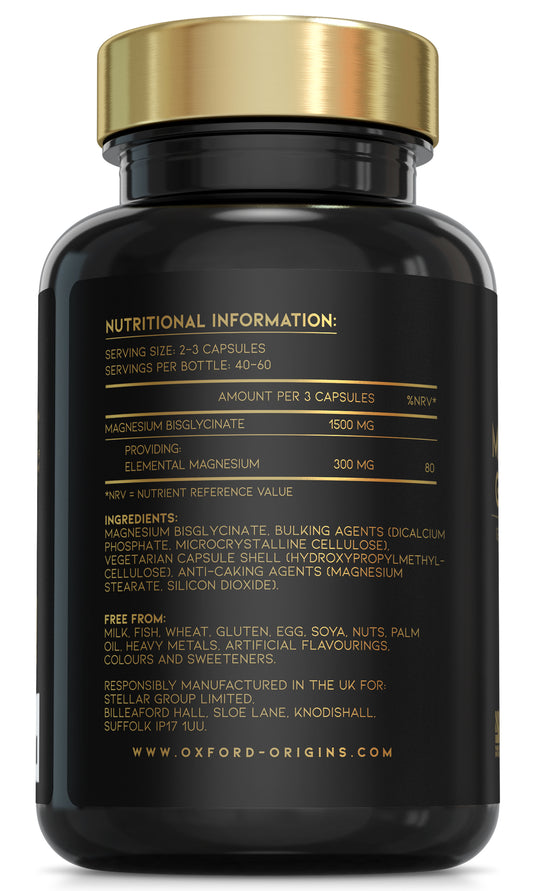
Magnesium never travels alone. It's always bound to something else — an oxide, a citrate, a glycinate — because raw magnesium isn't stable enough to sit in a capsule on its own. That “something else” adds bulk and weight, so a supplement listing 1,000mg of magnesium glycinate isn't giving you 1,000mg of magnesium. It's giving you roughly 140mg, because glycinate itself makes up most of that weight.
Compare that to magnesium oxide, a cheaper form you'll find padding out a lot of budget multivitamins. Oxide is around 60% elemental magnesium by weight — a much bigger share. On paper it looks like the better deal. In practice, oxide is poorly absorbed, with some research putting usable uptake as low as 4%. Glycinate, bound to the amino acid glycine, is absorbed through a different route in the small intestine and gets closer to 80% uptake. Less magnesium, more of it actually gets used. That's the whole story in one line, and it's the bit most “best magnesium” roundups skip.
For context on how much you actually need: the NHS Reference Nutrient Intake is 300mg a day for adult men and 270mg for women, ideally from a mix of food and, where needed, supplementation. The UK's safe upper level for supplemental magnesium specifically is 400mg a day — worth knowing if you're stacking a supplement on top of a magnesium-fortified diet.
What magnesium is actually authorised to do
Under EU/UK nutrition and health claim rules, magnesium (from a food that's at least a source of it) is permitted to say it contributes to normal nervous system function, normal muscle function, normal psychological function, and a reduction of tiredness and fatigue. Those are the claims with real regulatory backing, and they're worth more than a vague “supports relaxation” line precisely because they've been checked.
Sleep itself sits in murkier territory — there's no EU-authorised claim that says “magnesium improves sleep,” and any brand telling you it does outright is overreaching. What we can point to instead is the research on magnesium's role in the nervous system: it acts on GABA receptors (your brain's main calming signal) and blocks some of the more stimulating NMDA activity, which is a plausible mechanism for why people report feeling more settled at night.
The clinical picture backs a modest version of this. A randomised, double-blind, placebo-controlled trial published in Nature and Science of Sleep in 2025 gave 155 adults with self-reported poor sleep either 250mg of elemental magnesium as bisglycinate or a placebo for four weeks. The magnesium group saw a significantly greater drop in Insomnia Severity Index scores than placebo (−3.9 vs −2.3), though the researchers themselves described the effect size as small. It's a real, measurable improvement — not a cure, not lights-out-in-ten-minutes, but a genuine nudge in the right direction for people already struggling to settle.
So what should you actually look for?
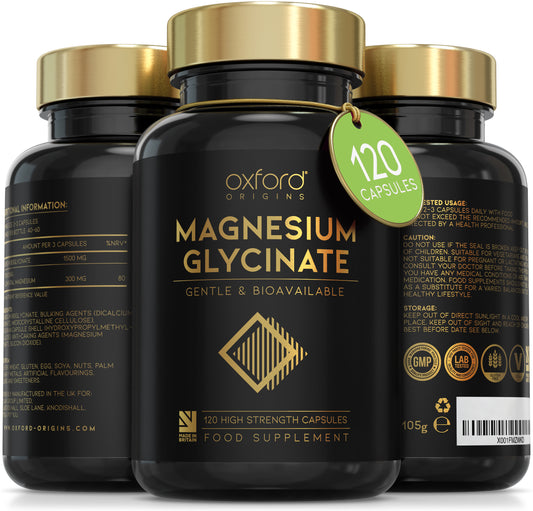
Skip the “1,000mg!” headline number and check the small print for elemental magnesium content instead — most decent glycinate products will state it somewhere, even if you have to look. Aim for something in the 200–350mg elemental range for an evening dose, which lines up with both the NHS RNI and the dose used in that 2025 trial. Our own magnesium glycinate capsules state theirs plainly on the label — 100mg elemental per capsule, so three brings you right into that range — which is really the point: you should be able to do this maths for any supplement you're considering, ours included.

Take it a couple of hours before bed rather than right as your head hits the pillow — magnesium doesn't work like a sedative that switches you off on contact, it works over weeks as your levels stabilise. Consistency matters more than timing precision.
And if a product's stomach-friendliness matters to you (it should — this is the whole reason glycinate exists as a category), that's genuinely one of the clearer differences between forms. Oxide is cheap and can cause loose stools at anything beyond a small dose; glycinate was more or less developed to avoid that problem.
The standard, applied properly
We built our magnesium glycinate formula around elemental dose rather than headline weight — it's a duller thing to put on a label, but it's the number that actually decides whether the supplement does anything. That's the whole idea behind becoming the standard rather than chasing the biggest number on the shelf: it's a quieter kind of confidence, but it's the one backed by what the evidence actually says.
If you've been taking a “high strength” magnesium and wondering why nothing's changed, there's a decent chance the label was the problem, not the mineral. And if magnesium is just one piece of your evening routine, we've rounded up the rest of what actually helps in 7 Ways to Sleep Like a Baby.
Frequently asked questions
How long does magnesium glycinate take to work for sleep?
Give it three to four weeks of consistent use before judging it. That's the window used in the 2025 bisglycinate trial referenced above, and it matches what most people report — a gradual settling rather than an overnight switch. Some notice a difference within days; don't expect that as the norm.
Can you take magnesium glycinate every night?
Yes. It's one of the gentler forms specifically because it doesn't tend to cause the loose stools associated with oxide or citrate at higher doses, which is why it suits ongoing nightly use for most people. Stay within the UK's 400mg supplemental upper limit and it's considered safe for regular, long-term use.
What's the difference between magnesium glycinate and magnesium bisglycinate?
Nothing meaningful — they're the same compound. “Bisglycinate” is the more chemically accurate term (two glycine molecules bound to each magnesium ion), while “glycinate” is the shortened version brands tend to put on packaging. If you see either on a label, it's the same ingredient.
Is it safe to take magnesium glycinate long-term?
At sensible doses, yes — this is one of the better-tolerated forms for exactly that reason. As with any supplement taken regularly, it's worth checking in with a GP or pharmacist if you're on medication that interacts with magnesium (certain antibiotics and diuretics, for instance), or if you have kidney issues that affect how you clear excess minerals.
At Oxford Origins, your wellbeing is our priority, and although we pride ourselves on our expertise in nutrition and supplementation, it's important to acknowledge the individuality of each person. Articles published by Oxford Origins are not intended to treat, diagnose, cure or prevent any disease, or replace the advice of your GP. We always recommend consulting with a healthcare provider if you encounter any health concerns, and we'll always be here to support you so you're never alone on your journey.