Walk down the supplement aisle and "women's multivitamin" is everywhere, usually in pink packaging with rose gold lettering. Whether that's genuine formulation or just marketing depends on which nutrient you're looking at — some genuinely differ by UK guidance, and most really don't.
The one nutrient that genuinely differs: iron
This is the clearest, most defensible difference. The UK Reference Nutrient Intake for iron is 14.8mg a day for menstruating women aged 19-49, compared with 8.7mg for men — a gap driven directly by monthly blood loss, not a formulation choice.[1] Once women pass menopause, that gap narrows considerably, since the need driving it largely goes away.
Folic acid is the other real difference — but it's not really about sex
Folic acid gets marketed as a "women's" nutrient, but the actual NHS guidance tells a more specific story: the recommendation rises to 400 micrograms a day specifically for anyone trying to conceive, from before conception through the first 12 weeks of pregnancy — not for women generally.[2]
"It's less a male/female difference and more a 'trying to conceive or not' difference — a detail most pink-and-blue packaging glosses over."
What doesn't actually differ
Beyond those two, most vitamin and mineral requirements sit close enough between sexes that a genuinely separate formula isn't doing much nutritional work. A lot of what gets labelled "for her" is really added extras — collagen, hyaluronic acid, extra biotin — layered on top of a fairly standard multivitamin base, rather than a wholesale rebuild of the nutrient profile.
- Check the iron amount — it should sit near the 14.8mg reference above, not a token amount.
- Check the folic acid amount against your actual situation — general intake versus the higher pregnancy-specific 400mcg figure are different targets.
- Treat collagen, hyaluronic acid and extra biotin as bonus extras — not the core reason to choose a sex-specific formula.
Where our own formula lands
If you're weighing up a women's multivitamin against a standard one, the iron and folic acid content are the numbers actually worth comparing — not the ingredient list length.

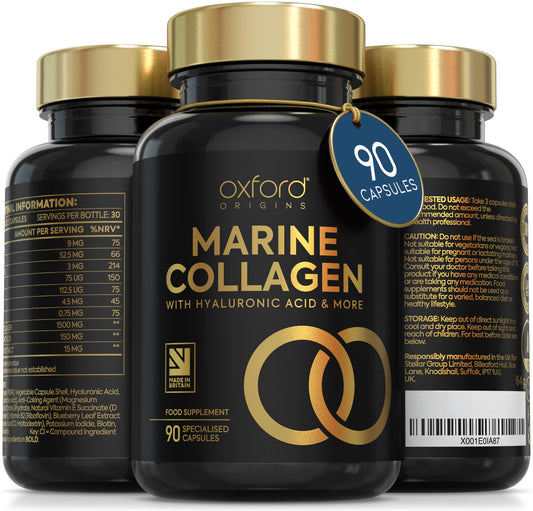
Ours includes iron and folic acid among its 27 nutrients, alongside marine collagen and hyaluronic acid as the added extras — but if you're actively trying to conceive or already pregnant, compare the stated folic acid amount against the NHS's pregnancy-specific 400mcg guidance, and talk to your GP or midwife about whether a dedicated pregnancy supplement is the more appropriate choice for that stage specifically. We'd rather point you toward the right product than assume one formula covers every stage. If you want the honest read on whether the collagen extra is doing much on its own, we've covered that separately in Collagen Supplements: Does the Science Actually Hold Up?
The standard, not the packaging colour
Becoming the standard here means being upfront that most of what separates "his" and "hers" multivitamins is iron, a life-stage-specific folic acid need, and some added extras — not a fundamentally different nutritional case. Buy on the numbers, not the branding.
Frequently asked questions
Do women really need more iron than men?
Yes, specifically menstruating women aged 19-49 — the UK RNI is 14.8mg a day versus 8.7mg for men, reflecting monthly blood loss. The gap narrows after menopause.
Is a women's multivitamin safe to take while trying to conceive?
Check the folic acid amount against the NHS's pregnancy-specific 400mcg guidance first — a general women's multivitamin may be dosed at a lower, general-population level. Talk to your GP or midwife about whether a dedicated pregnancy supplement suits your stage better.
What's actually different between men's and women's multivitamins?
Mainly iron content and, for some women specifically, folic acid needs tied to pregnancy planning rather than sex generally. Beyond that, differences are often added extras rather than a different core nutrient profile.
Do the collagen and hyaluronic acid extras in women's multivitamins actually do anything?
The evidence for collagen supplementation's skin benefits is genuinely mixed and skews toward industry-funded research, so treat these as pleasant additions rather than the main reason to choose a formula.
Sources
- British Nutrition Foundation — nutrition recommendations for women, UK RNI for iron: nutrition.org.uk/nutrition-for/women/nutrition-recommendations-for-women
- NHS — pregnancy vitamins and supplements, folic acid guidance: nhs.uk/pregnancy/keeping-well/pregnancy-vitamins-and-supplements
At Oxford Origins, your wellbeing is our priority, and although we pride ourselves on our expertise in nutrition and supplementation, it's important to acknowledge the individuality of each person. Articles published by Oxford Origins are not intended to treat, diagnose, cure or prevent any disease, or replace the advice of your GP. We always recommend consulting with a healthcare provider if you encounter any health concerns, and we'll always be here to support you so you're never alone on your journey.