Frankincense has been burned in temples for thousands of years. Boswellia, the extract of the same tree family (Boswellia serrata, if you're reading a label), has a more recent job: it turns up in joint supplements, usually next to turmeric. The pitch is easy to say and hard to check. So here's what the research on boswellia and osteoarthritis actually says, including the parts the label won't mention.
What the trials found
The most-cited analysis pooled seven randomised trials in people with osteoarthritis, 545 participants in all. Boswellia extract was compared with placebo or conventional medicine, and on average people taking it reported lower pain scores and better function on the standard knee questionnaires.[1] The authors suggested at least four weeks of treatment, with doses in the 100-250mg range appearing in the trials.
A bigger 2025 network meta-analysis lined up seven nutritional supplements for knee osteoarthritis across 39 trials and 4,599 people. For pain, stiffness and function, boswellia ranked first on the statistical ordering, and it was the only supplement to reach significance on the pain and stiffness scores.[2] Curcumin, ginger and collagen showed up too, on some measures.
The catch: small trials, patchy quality
Here's where the headline gets complicated. The results across those seven trials swung widely from study to study, and the authors rated the overall trial quality as medium to low, with unclear randomisation and blinding in several.[1] The 2025 team said much the same: the evidence for boswellia is weak, and they called for larger, better-designed trials.[2]
The US National Center for Complementary and Integrative Health is blunter. Taking boswellia by mouth may help reduce inflammation and pain in osteoarthritis, it says, but there isn't enough high-quality evidence to say it's useful for any health condition.[3] We agree with that framing. Interesting signal, not a closed case. And botanicals like boswellia don't come with an authorised health claim to lean on, which is exactly why we're pointing you at the studies and their limits instead.
Boswellia on a label
Trial extracts are specific, standardised products. Supplement shelves are not. Two bottles that both say "boswellia" can contain very different amounts and extract types, and the trials can't tell you that yours matches. What to look for:
- The boswellia amount per capsule — in milligrams, not buried inside a "complex" total.
- The type of extract — Boswellia serrata, ideally stated, and any standardisation spelled out.
- Third-party testing — botanicals vary batch to batch, so independent checks matter.
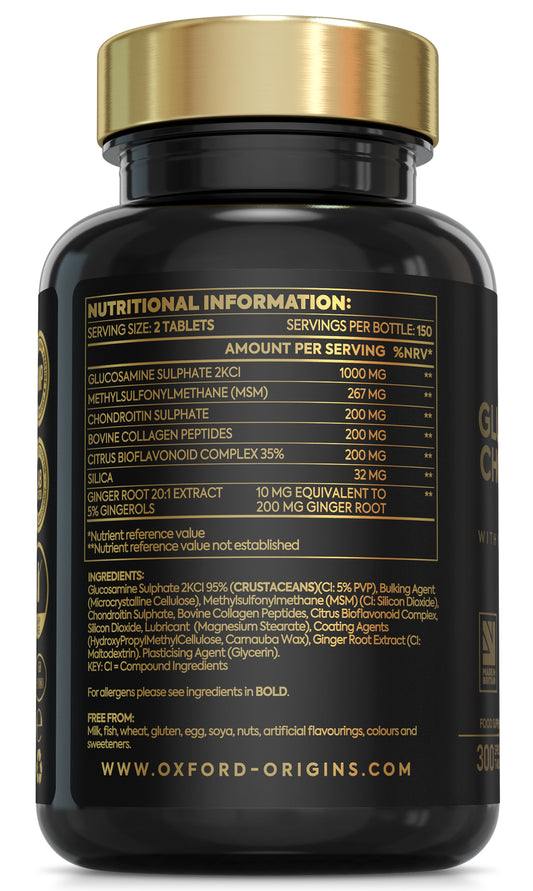
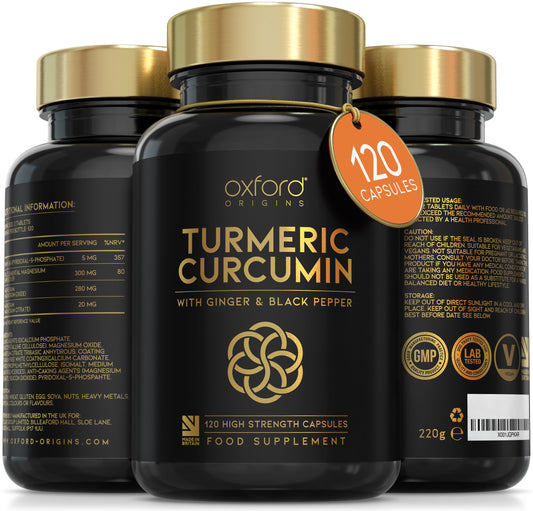
Turmeric is the usual partner. The trials above tested boswellia on its own, so pairing it with turmeric is a formulation choice rather than a proven synergy. Turmeric has its own, separate evidence base, which we've gone through in Turmeric and Joint Health: Separating the Hype from the Evidence. If you'd rather start from the full picture of joint ingredients, our piece on glucosamine, chondroitin and MSM covers that ground.
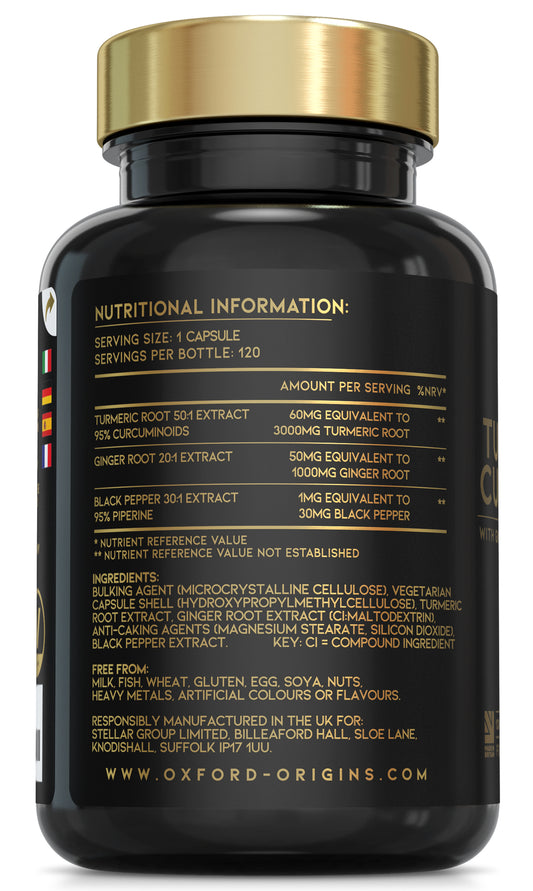
If you want both in a single capsule, that's what Turmeric and Black Pepper with Boswellia Serrata is built for: a 50:1 turmeric extract (95% curcumin), boswellia serrata and black pepper, in one capsule a day. We'd rather you read the supplement facts panel against the trial range above than take our word for it.

Who should check first
Osteoarthritis is a long-term condition, and the NHS advice is to look after it with exercise, weight management and the medicines your team prescribes. It also says to check with your healthcare team before taking supplements, because they can sometimes interfere with medicine.[4] Boswellia is no exception. Doses up to 1,000mg a day have been used safely in trials lasting up to six months, but little is known about medicinal doses during pregnancy or breastfeeding.[3] If you take any regular medication, or you're unsure, ask your GP or pharmacist first.
A supplement is a small part of the plan
The walk on a cold morning does more for most knees than any capsule will. That's not a dig at capsules. It's the honest order of things, and a gold standard supplement is one that knows its place in it. If boswellia earns a spot in your routine, give it a month, keep a note of how you feel, and keep your GP in the loop. Become the standard, one realistic expectation at a time.
Frequently asked questions
Does boswellia actually work for joint pain?
Some trials say it may help. A 2020 meta-analysis of seven trials found lower pain scores and better function in people with osteoarthritis compared with control groups, but the authors described the trial quality as medium to low and the results as highly variable. It's a promising signal rather than a settled answer, and it isn't a replacement for the exercise, weight and medicine plan your healthcare team sets out for osteoarthritis.
How long does boswellia take to work?
The 2020 meta-analysis authors suggested at least four weeks of treatment, so that's a fair minimum before judging. Expect weeks rather than days, and keep a simple note of how your joints feel at the start so you're comparing against something real. Turmeric, its usual partner, runs on a similar clock; our turmeric and joint health guide has the detail.
Is it safe to take boswellia every day?
Doses of up to 1,000mg a day have been used safely in clinical trials lasting up to six months, according to the US National Center for Complementary and Integrative Health. In the meta-analysis, adverse events weren't significantly different from control groups, though the authors said they couldn't be sure it is safer or riskier. Little is known about medicinal doses in pregnancy or breastfeeding, so check with your GP or pharmacist first if that applies to you.
Can I take boswellia with arthritis medication?
Speak to your GP, pharmacist or arthritis team before adding it. The NHS advises checking with your healthcare team before taking supplements alongside osteoarthritis medicine, because they can sometimes interfere with each other. Bring the product label with you so they can see exactly what's in it.
Sources
- Yu et al., 2020, BMC Complementary Medicine and Therapies — systematic review and meta-analysis of Boswellia for osteoarthritis (7 RCTs, 545 participants; pain, function, quality of evidence, dose and duration). https://link.springer.com/doi/10.1186/s12906-020-02985-6
- Zhang et al., 2025, Nutrients — network meta-analysis of nutritional supplements for knee osteoarthritis (39 RCTs, 4,599 patients), as reported by NutraIngredients. https://www.nutraingredients.com/Article/2025/08/20/boswellia-shows-superiority-in-improving-knee-pain-stiffness-in-meta-analysis
- US National Center for Complementary and Integrative Health — boswellia: evidence summary, safety and pregnancy. https://www.nccih.nih.gov/health/boswellia
- NHS — living with osteoarthritis: exercise, medicines and checking with your healthcare team before supplements. https://www.nhs.uk/conditions/osteoarthritis/living-with/
At Oxford Origins, your wellbeing is our priority, and although we pride ourselves on our expertise in nutrition and supplementation, it's important to acknowledge the individuality of each person. Articles published by Oxford Origins are not intended to treat, diagnose, cure or prevent any disease, or replace the advice of your GP. We always recommend consulting with a healthcare provider if you encounter any health concerns, and we'll always be here to support you so you're never alone on your journey.