Selenium doesn't get much airtime. Nobody's running ads for it. But your thyroid can't make working thyroid hormone without it, and there's a decent chance your diet isn't giving you as much as you'd assume — not because of anything you're doing wrong, but because of what's happened to British soil over the last fifty years.
What selenium actually does for your thyroid
Gram for gram, the thyroid holds more selenium than almost any other organ in the body.[1] It uses it to build selenoproteins — a family of enzymes that convert the thyroid hormone T4 into T3, the active form your cells actually use for energy, temperature regulation and metabolism. Without enough selenium, that conversion slows down, even if your thyroid gland itself is otherwise perfectly healthy. Selenium's contribution to normal thyroid function is an authorised health claim under EU and GB law, on the basis of a daily intake of 55 micrograms.[1]
Why the UK is a bit of a special case
Up until the mid-1970s, roughly half the wheat used in British bread came from North America, grown on selenium-rich soil. When millers switched to European-grown wheat for cost and supply reasons, they didn't switch back — and UK soil is naturally low in selenium to begin with. The result shows up directly in what people were actually eating.
Intakes have recovered slightly since — current estimates sit around 48–58µg a day[2] — but that's still hovering right around the bare minimum, not comfortably above it. The NHS reference nutrient intake is 75µg a day for men and 60µg for women.[3] That gap between men and women isn't a rounding error, either — it's one of the reasons a one-size-fits-all multivitamin doesn't always make sense, something we've written about separately in our piece on whether women need a different multivitamin to men.
Food sources, and why they're not always reliable
Brazil nuts are the obvious answer — a single nut can contain around 48µg, more than half a day's worth on its own.[3] Beyond that, selenium turns up in eggs, tuna, sardines, kidney and liver. The catch is consistency: Brazil nut selenium content varies enormously depending on which soil the tree grew in, and most people aren't eating liver on a Tuesday. Bread and cereals, which used to be a reliable background source for most of the country, now contribute far less than they did two generations ago.
What to check before you assume you're covered
- How often you actually eat the reliable sources — Brazil nuts, seafood and organ meat, not just bread.
- Whether you eat mostly UK-grown produce — lower background soil selenium means lower selenium in what's grown in it.
- Whether you follow a plant-based diet — several of the richest sources are animal-based, so intake needs a bit more deliberate planning.
- Whether you're already taking a multivitamin — and if so, whether selenium is actually on the label.
Signs you might be running low
True selenium deficiency with obvious symptoms is genuinely rare in the UK — most people sitting below the reference intake don't have a diagnosable problem, they're just not topped up. That said, low selenium status has been associated with fatigue, low mood, hair that seems to be thinning for no obvious reason, and a general sense of sluggishness that's easy to write off as "just tired." None of these are selenium-specific — they overlap with dozens of other things, including underactive thyroid itself, which is exactly why they're worth mentioning to a GP rather than self-diagnosing from a blog post. A simple blood test can check both thyroid function and, if there's real cause for concern, selenium status directly.
"Most people sitting below the reference intake don't have a diagnosable problem — they're just not topped up."
Selenium, Hashimoto's, and what the research actually shows
This is where it gets more clinically specific, so it's worth being precise. A systematic review and meta-analysis of randomised controlled trials in people with Hashimoto's thyroiditis — an autoimmune condition and the most common cause of underactive thyroid in the UK — found that selenium supplementation reduced levels of thyroid antibodies (specifically anti-TPO) compared with placebo.[4] That's a genuinely interesting finding. It is not, however, the same as saying selenium reverses Hashimoto's or reduces the need for thyroid medication — the same body of research is far less consistent on whether lower antibodies actually translate into fewer symptoms or better thyroid hormone levels. If you have a diagnosed thyroid condition, particularly one being managed with levothyroxine, this is a conversation for your GP or endocrinologist, not a decision to make off the back of an article. Selenium can also interact with how some thyroid medication is monitored, so timing and dose matter more than they would for a generally healthy adult.
How much, and where the ceiling is
For most adults, the NHS considers 350µg a day or less from supplements unlikely to cause harm.[3] Selenium has a narrower safety margin than most minerals people supplement casually — more isn't better past a certain point, and selenosis (hair loss, brittle nails, a metallic taste, in more serious cases nerve damage) is a real if uncommon risk at high doses over time. The sensible approach isn't megadosing; it's making sure your daily intake is consistently adequate rather than occasionally spectacular.
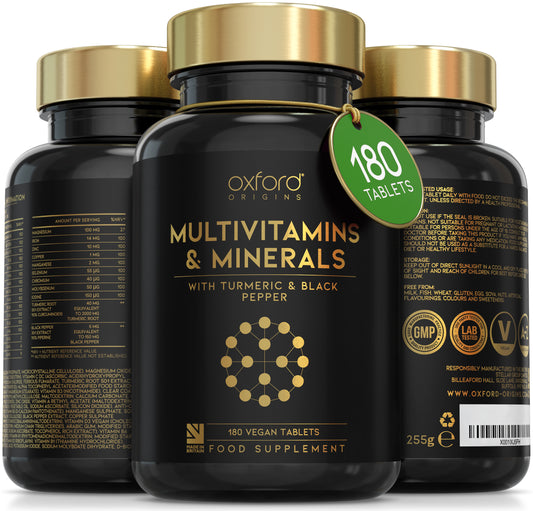
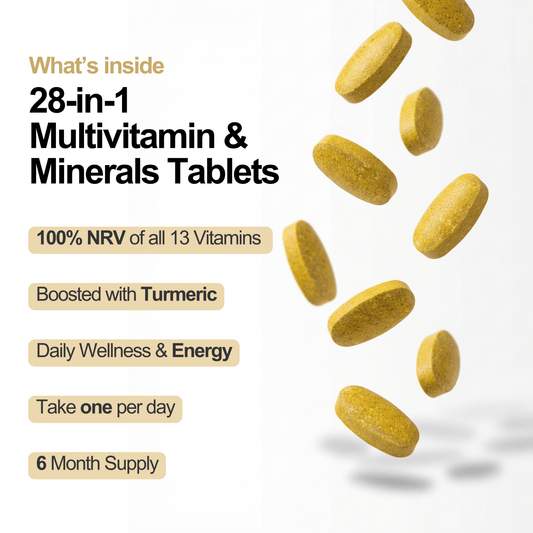
That's really the argument for a well-formulated multivitamin over trying to hit the number through food alone or adding yet another single-nutrient bottle to the shelf. Our Multivitamins & Minerals formula was built around that idea — 28 nutrients, selenium included, in one tablet a day, so it's covered without needing to think about it. It's the kind of unglamorous consistency that Oxford Origins was built around: become the standard, then just keep hitting it.

The short version
Selenium isn't a trendy ingredient and it's not going to headline anyone's marketing campaign. It's just quietly necessary — and thanks to a decision British millers made about wheat sourcing fifty years ago, more of us are running closer to the edge than we'd probably guess. You don't need to panic about it. You do need to know it's on the label somewhere.
Frequently asked questions
How long does it take for selenium levels to improve once you start supplementing?
Blood selenium levels typically start to rise within a few weeks of consistent daily intake, but selenoprotein activity — the actual functional effect on thyroid hormone conversion — tends to take longer to stabilise, often 8–12 weeks. This is one of those nutrients where consistency matters more than the first week's dose.
Can you take too much selenium?
Yes. Selenium has one of the narrower safety margins among commonly supplemented minerals. The NHS considers 350µg a day from supplements the point past which harm becomes a real possibility, and symptoms of excess (selenosis) include hair and nail brittleness, gastrointestinal upset and a persistent metallic taste. If you're eating Brazil nuts regularly and also taking a supplement, it's worth adding up your total intake rather than assuming more is simply better.
Do I need a separate selenium supplement, or is it enough if it's in my multivitamin?
For most generally healthy adults without a diagnosed thyroid condition, a well-formulated multivitamin that includes selenium at or around the reference intake is enough — there's no strong evidence that healthy adults need to supplement selenium in isolation at higher doses. Separate, higher-dose selenium is really only relevant where a GP or specialist has identified a specific clinical reason for it.
What's the difference between selenium for general thyroid health and selenium for Hashimoto's specifically?
General thyroid support is about making sure you're not running short of a nutrient your thyroid needs to function normally — that's the EFSA-recognised claim, based on ordinary reference intakes. The Hashimoto's research is a narrower, more clinical question about whether supplementation changes antibody levels in people who already have a diagnosed autoimmune thyroid condition. The evidence for the second is real but more specific, and it's a conversation to have with whoever manages that diagnosis, not something to self-apply based on the first.
Sources
- EFSA — scientific opinion authorising the claim that selenium contributes to normal thyroid function, cited for the mechanism and the 55μg/day basis of the claim. https://www.efsa.europa.eu/en/efsajournal/pub/1727
- A Review of Dietary Selenium Intake and Selenium Status in Europe and the Middle East (PMC) — cited for the UK's historical and current selenium intake figures. https://pmc.ncbi.nlm.nih.gov/articles/PMC4377864/
- NHS — Vitamins and minerals: Others, cited for UK reference nutrient intakes, food sources and the safe upper limit from supplements. https://www.nhs.uk/conditions/vitamins-and-minerals/others/
- Selenium Supplementation in Patients with Hashimoto Thyroiditis: A Systematic Review and Meta-Analysis of Randomized Clinical Trials (PMC) — cited for the effect of selenium on thyroid antibody levels in Hashimoto's. https://www.ncbi.nlm.nih.gov/pmc/articles/PMC10951571/
At Oxford Origins, your wellbeing is our priority, and although we pride ourselves on our expertise in nutrition and supplementation, it's important to acknowledge the individuality of each person. Articles published by Oxford Origins are not intended to treat, diagnose, cure or prevent any disease, or replace the advice of your GP. We always recommend consulting with a healthcare provider if you encounter any health concerns, and we'll always be here to support you so you're never alone on your journey.