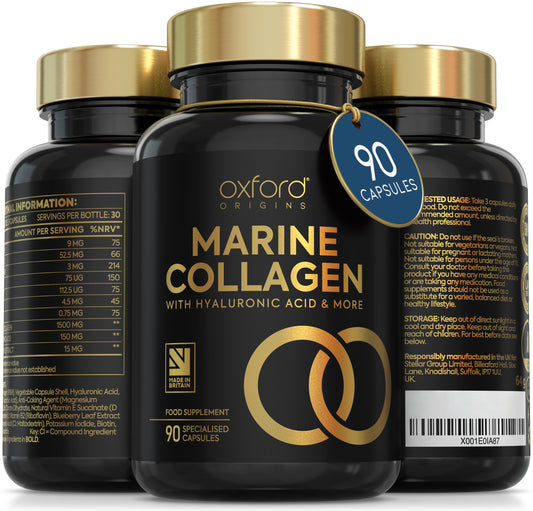
Pick up any probiotics bottle and you'll find a line of Latin on the back. Lactobacillus acidophilus. Bifidobacterium lactis. A string of letters and numbers after it. It looks like a code, and most of us skim past.
Worth slowing down, though. Those names tell you what you're actually swallowing, and they're the one part of the label a brand can't wave away with a lifestyle photo.
Genus, species, strain: three names, three levels
Think of it like a dog. Lactobacillus is the genus, the broad family, roughly "dogs". acidophilus is the species, a bit like "spaniel". A strain code is the individual animal, with a specific history and, in research, a specific track record.
That last level is where it gets interesting. The NHS is blunt on this: there are many types of probiotic with different effects, little is known about which is best, and a product that helps one problem won't necessarily help another.[1] So when a study says "probiotics did X", the honest follow-up is always: which ones, exactly?
The Lactobacillus rename nobody told you about
If you've noticed older and newer labels using different names, you're not imagining it. In 2020, researchers proposed splitting the old Lactobacillus genus into 25 genera.[2] Some familiar species now live under newer genus names such as Lacticaseibacillus.[3] The bacteria didn't change. The filing system did.
It means a brand using the old name and a brand using the new one can be describing the same organism. Not a red flag in itself. Worth knowing before you decide one label looks "more scientific" than another.
So where does Bifidobacterium fit?
Bifidobacterium is a separate genus, not a subset of Lactobacillus. You'll see both in plenty of products, which is why they get lumped together as "good bacteria". They're distinct groups, and that's about as far as it's safe to generalise. Research is done on particular strains, not on genera as a whole.
"A product that helps one problem won't necessarily help another."
Why strain-level detail matters more than the genus
The scientific body ISAPP agreed in 2014 that the word "probiotic" can be applied at species level, because there's enough human research on commonly studied species.[4] That's about when you can use the term. It isn't a promise that every strain of a species does the same thing, and we'd be wary of anyone who treats it as one.
The NHS adds a reality check on quality too: probiotics are generally regulated as food, not medicine, so it can't always be assured that a product holds the labelled bacteria, in sufficient numbers, alive when they reach your gut.[1] Which is the case for buying from a brand that tests and says where it makes things. Ours are made in the UK, in a BRC Grade AA, GMP-certified facility, and tested by Eurofins.
How to read a label in about thirty seconds
- Full names, not just "live cultures" — genus and species at the very least, ideally the strain code too.
- A count, in CFU — colony-forming units, the number of live organisms the maker is claiming.
- One clear serving — how many capsules or tablets make up that count.
Then ask a plainer question: does it do what you want from it? A single, named species at a clear count is easier to judge than a long blend with no amounts. That's the idea behind our Daily Pro Bio Cultures: Lactobacillus acidophilus, 550 million live cultures, one mini tablet a day. Just be clear on what that does and doesn't tell you. The label names the species, so we're not borrowing results from studies on a particular strain code and attaching them to the tablet.

If you'd rather start with the basics, our guide to probiotics vs prebiotics covers what feeds what.
The short version
Names on a label are information. Genus tells you the family, species narrows it down, and strain is where the research really lives. Read one label properly this week and every bottle after that gets easier to judge.
Frequently asked questions
Is Lactobacillus or Bifidobacterium better?
Neither wins outright. They're separate groups, and the NHS notes that different probiotics have different effects and that little is known about which is best.
Why does my probiotic say something different from the old Lactobacillus name?
Because the genus was reclassified in 2020 into 25 genera. The organism on an older label and the one on a newer label can be the same bacterium under a different name.
Are probiotics safe to take every day?
The NHS says that for most people probiotics appear to be safe. If you have an existing health condition or a weakened immune system, talk to a doctor before taking a supplement.
How long do probiotics take to work?
It varies with the person and the strain, and there's no single answer. We go through the realistic range in how long probiotics take to work.
Sources
- NHS — probiotics: definition, limited evidence for many claims, strain differences, regulation as food, safety. https://www.nhs.uk/tests-and-treatments/probiotics/
- Zheng et al., 2020 — taxonomic note proposing the split of Lactobacillus into 25 genera (International Journal of Systematic and Evolutionary Microbiology). https://pubmed.ncbi.nlm.nih.gov/32293557/
- List of Prokaryotic names with Standing in Nomenclature — genus Lacticaseibacillus Zheng et al. 2020. https://www.bacterio.net/genus/lacticaseibacillus
- ISAPP — 2014 consensus statement on the definition and scope of the term probiotic (applied at species level). https://isappscience.org/june-10-2014/
At Oxford Origins, your wellbeing is our priority, and although we pride ourselves on our expertise in nutrition and supplementation, it's important to acknowledge the individuality of each person. Articles published by Oxford Origins are not intended to treat, diagnose, cure or prevent any disease, or replace the advice of your GP. We always recommend consulting with a healthcare provider if you encounter any health concerns, and we'll always be here to support you so you're never alone on your journey.